Key takeaways
- An IoT pentest covers four distinct attack surfaces: firmware, hardware interfaces, radio and cloud. Define which are in scope before sending a brief.
- The quality of assets you hand over, from firmware images to hardware units with debug interfaces accessible, determines how efficiently the engagement runs.
- A credible proposal names the methodology, the tooling and the individuals responsible for each attack surface, not just a list of services.
- Risk ratings should follow a defined scoring scheme such as CVSS, and remediation advice should be component-specific rather than generic.
- In UAE regulated environments, IoT security testing may be required under TDRA, DESC, CBUAE or ADHICS depending on your sector.
Define the scope before you send the brief
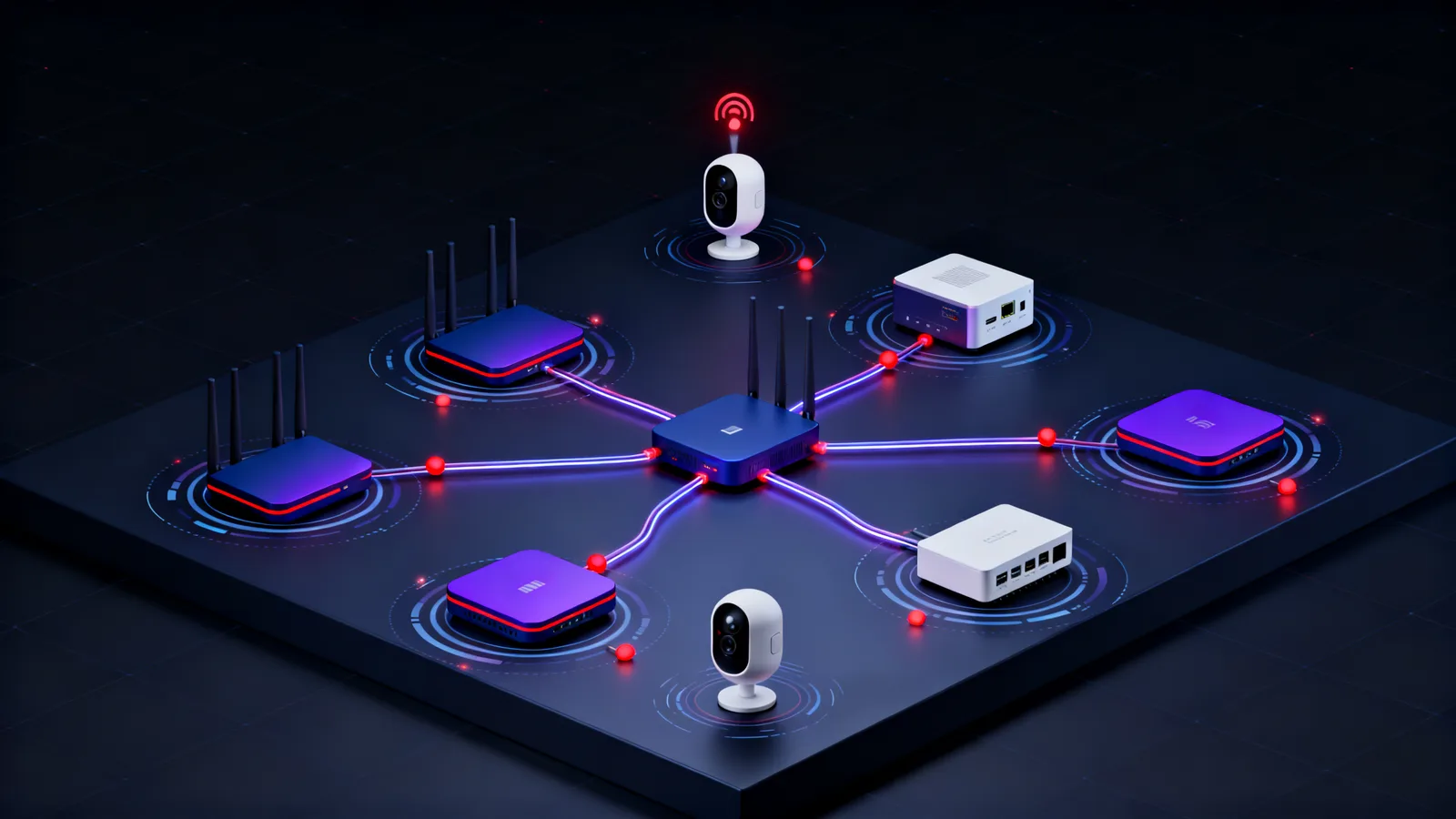
An IoT pentest is not a single engagement with a fixed scope. Before a tester can quote the work, you need to decide which of the four attack surfaces are in scope: the device firmware, the physical hardware interfaces, the radio protocols the device uses, and the cloud or API backend it connects to. Each surface requires a different skill set and a different set of test cases. A brief that says 'test our device' is too open to quote accurately or run safely.
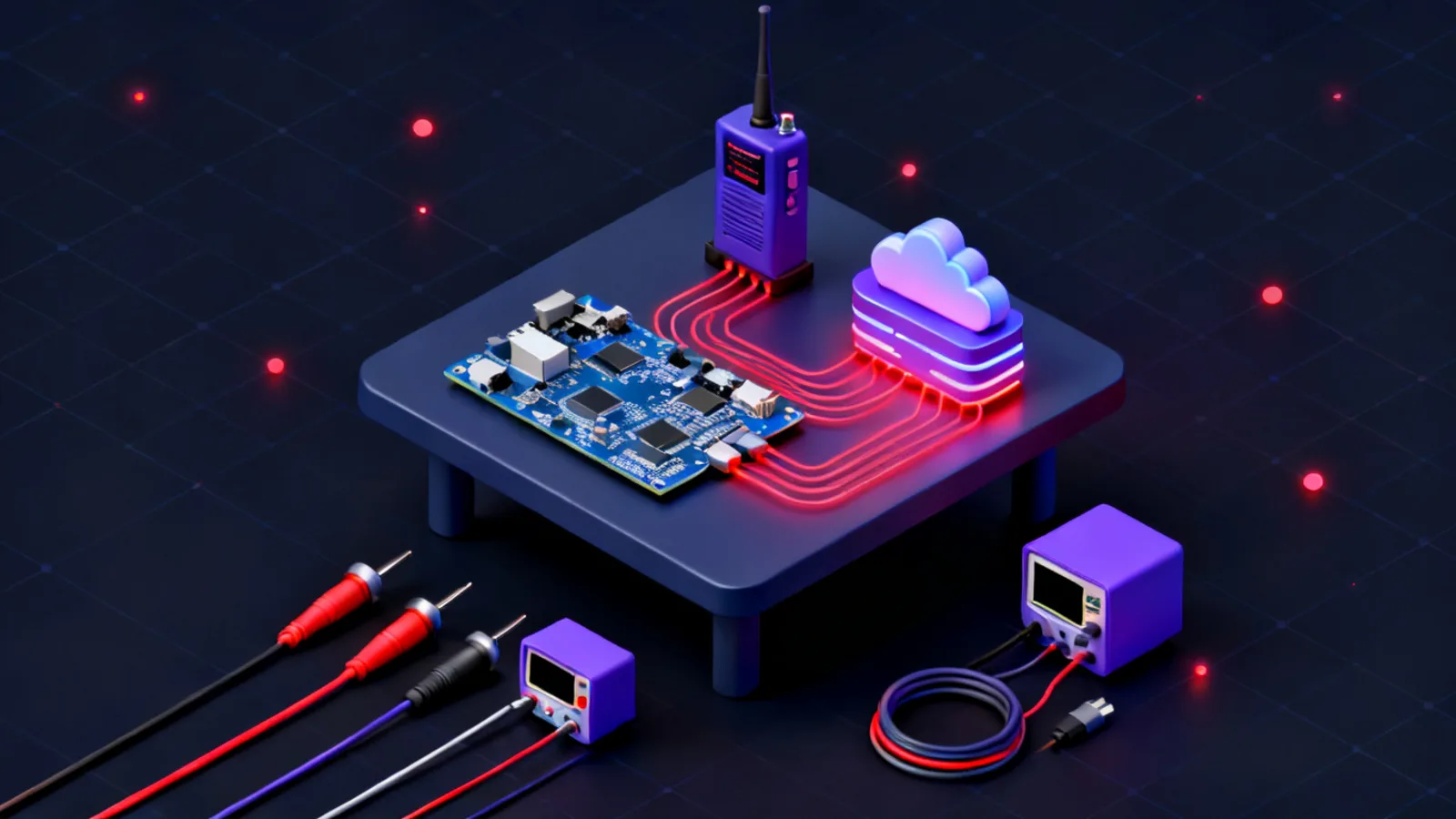
Firmware covers the OS, the application layer, the boot chain and any persistent credentials baked in at manufacture. Hardware interfaces include JTAG, UART, SPI and I2C, which give a tester either a debugging channel or direct flash access. Radio covers Bluetooth Low Energy, Zigbee, Z-Wave and proprietary RF protocols the device uses to communicate locally. The cloud side covers the API the device calls home through, the provisioning flow and the device management console. The article How an IoT pentest is run maps each surface to the techniques a tester will use.
A complete scope statement names each surface, the firmware version under test, the device model and revision, the cloud environment in scope (production, staging or a dedicated test tenant), and which test cases are excluded. Exclusions matter: a tester running fuzzing against a production provisioning endpoint can affect live devices. If staging does not exist, document the constraints and agree them before the engagement letter is signed.
Cloud and API backend
Device provisioning, management console, data pipelines
Radio protocols
Bluetooth LE, Zigbee, Z-Wave, proprietary RF
Hardware interfaces
JTAG, UART, SPI, I2C, flash read-out
Firmware and OS
Boot chain, filesystem, baked-in credentials
What to hand over before the engagement starts
An IoT pentest is not a standalone penetration testing exercise in the way a web application or infrastructure test is: the physical artefacts you provide shape what is testable. The quality of what you hand over directly determines how much of the engagement time is spent finding the test surface rather than testing it. At minimum: one or more physical devices with debug interfaces accessible, a copy of the current firmware image, architecture documentation showing the device's communication flows, and credentials or API keys for the cloud environment you have agreed to include in scope.
For firmware, hand over the version you want tested, not the latest candidate build unless that is the agreed target. If you can supply a debug-enabled build, do so: a firmware image without accessible JTAG or UART takes longer to analyse because the tester has to extract the filesystem from flash directly. Cloud access should be scoped to the environment and the principal the tester needs, typically a test tenant with device provisioning rights, not production admin credentials.
Architecture documentation does not need to be a formal specification. A network diagram showing what the device calls, which backend services it authenticates to, and what protocol each call uses, is enough to let the tester build an attack model before picking up the hardware. The companion mobile application, if one exists, is a separate mobile app pentest engagement costed separately. State whether it is in or out of scope when you send the brief.
| Asset | Scope relevance | Practical note |
|---|---|---|
| Physical device units | All engagements | One per firmware revision in scope; debug interfaces accessible where possible |
| Firmware image | All engagements | The version under test, in binary or archive form |
| Architecture diagram | All engagements | Communication flows, backend services, authentication protocol per call |
| Cloud environment access | Cloud surface in scope | Scoped to a test tenant; not production admin credentials |
| Mobile companion app | Optional, costed separately | Agree in or out of scope before the brief is sent |
| Hardware datasheets | Useful | Pin-out for JTAG, UART and SPI interfaces; saves setup time |
What a proposal must state about methodology
A proposal that lists 'firmware analysis, hardware testing, radio testing, cloud API testing' without saying how each will be approached tells you nothing about whether the team can run the engagement. For firmware, the methodology should name whether static analysis, dynamic analysis or both will be used, and which tooling. For radio, it should name the protocols in scope and the equipment the tester will bring, not generic capability claims.
A capable IoT pentest requires a team with at least three overlapping skill sets: embedded systems and firmware engineering, radio frequency testing including hardware and protocol analysis, and cloud or API security. A team strong in web application security but with only one firmware specialist will run out of depth quickly on a device with a complex boot chain. The proposal should name the individuals who will do the work and describe their background in each area, not just list tools or certifications.
The methodology should also reference an established testing standard. NIST SP 800-115 defines the technical methodology for security testing and is the basis most structured engagements build from. For the adversarial modelling layer, MITRE ATT&CK provides the technique catalogue an experienced tester will map findings against. A proposal that references neither is not necessarily weak, but ask what framework the team is using and why.
Three questions that reveal a team's IoT capability
Three questions tell you more about a team's IoT capability than any certification list. First, what is their process for extracting a filesystem from a locked device? A tester with real firmware experience will name a specific technique: binwalk for a known filesystem format, QEMU for emulation, or a direct SPI flash read-out depending on the device class. The technique matters because a locked production unit is the normal case, not an edge one.
Second, what radio equipment will they bring? An engagement covering Bluetooth Low Energy and Zigbee requires a BLE sniffer, a Zigbee analyser and the associated tooling for protocol replay. Ask the team to confirm they own or have access to the hardware for the protocols your device uses. Third, who handles the cloud side? If the team routes cloud testing through a web application team, verify that those individuals have worked on device-to-cloud APIs, not just browser-facing applications.
The infrastructure pentest skill set overlaps with the network layer of the cloud backend, and the API pentest skill set covers the device API surface, but neither alone covers the embedded and radio layers. A capable IoT team draws on all three, and the proposal should show how those skills are distributed across the engagement rather than naming a single generalist to cover all four surfaces.
Product maturity
Targeted assessment
Production, no audit requirement. Focus on firmware and cloud API as the highest-risk
Full pentest with evidence
All four surfaces, signed report, mapped to the applicable UAE regulation.
Firmware review
Early hardening before the design is finalised and tooling is locked.
Full pentest
A regulated prototype, such as a medical device before market approval.
Regulatory exposure
What the report must contain to be usable
A finished IoT pentest report should contain findings written to the level of detail needed to reproduce each one: the firmware version tested, the hardware revision, the tool or technique used, the exact command or sequence of steps, and the response that confirms the finding. A finding documented as 'weak firmware encryption' without the cipher, the key size or the supporting evidence tells the development team nothing they can act on. Each finding should identify the component it affects: firmware, radio, hardware interface or cloud backend.
Risk ratings should follow a defined scoring scheme. CVSS from FIRST is widely used and gives a reproducible numeric score that a development team can rank against other findings without needing to interpret prose. Beyond the score, each finding should carry a remediation recommendation specific to the technology: 'upgrade the TLS version on the provisioning endpoint' rather than 'improve encryption'. The remediation advice is the part of the report a development team will use most directly.
The report should also carry a test coverage summary that maps what was tested against what was in scope. If a radio protocol was de-scoped during the engagement because the device revision handed over did not support it, that fact should be in the report, not assumed to be understood. Any finding that surfaced in monitoring during the pentest should be cross-referenced with the tester's record to confirm it was documented and rated consistently.
IoT security testing in the UAE: which regulator applies
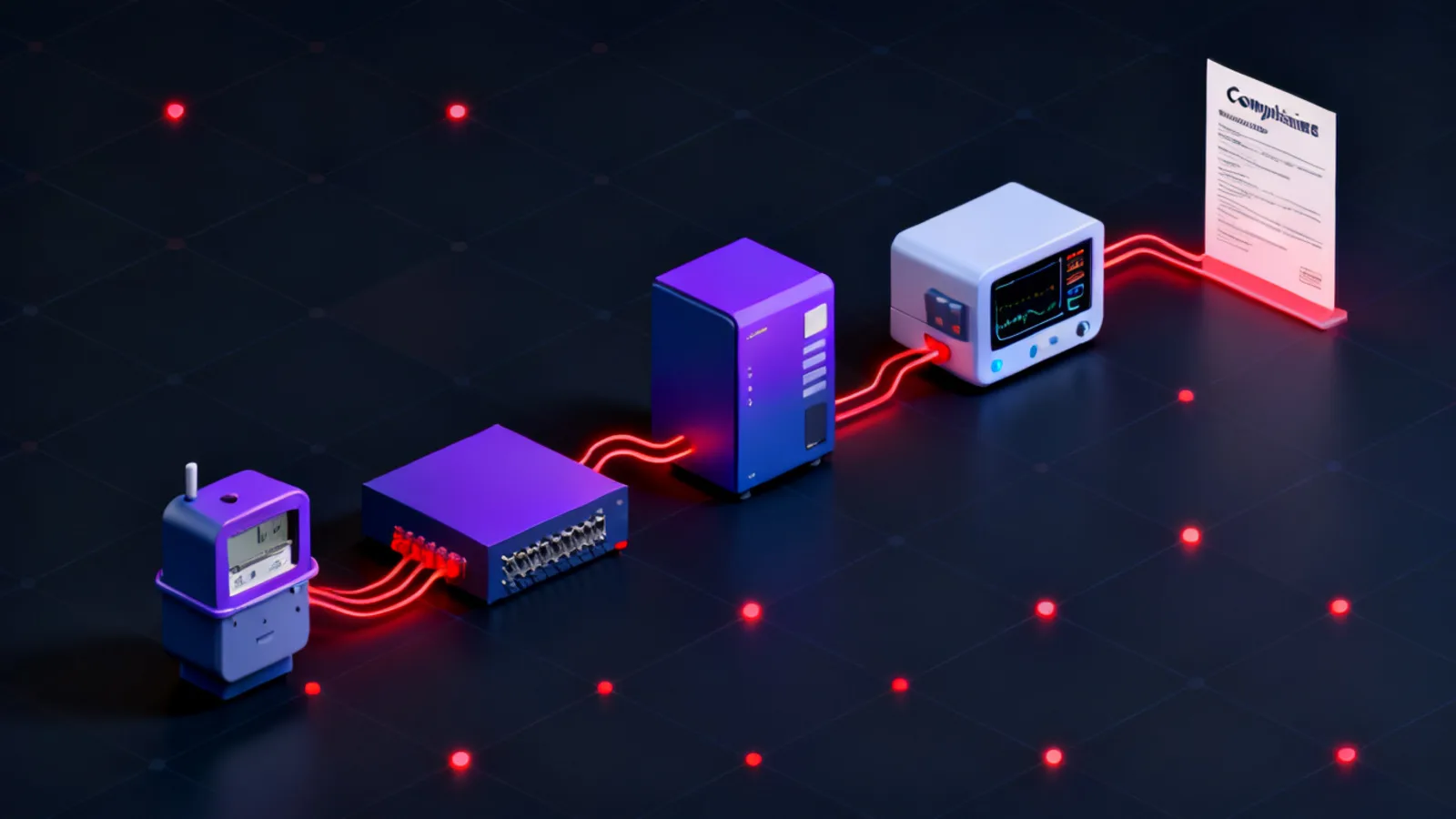
IoT security testing in the UAE sits within several regulatory frameworks depending on the sector deploying the device. The UAE Information Assurance Regulation, published under TDRA, sets baseline security requirements for government entities and critical infrastructure operators, which includes connected hardware deployed in smart city initiatives and building management systems. Organizations subject to this regulation should treat IoT security testing as part of their periodic assessment programme. The UAE rules that apply to IoT security testing maps each of the four main UAE regimes to the relevant device security obligations in detail.
In Dubai, the DESC framework applies to government entities and their direct suppliers. Any supplier providing connected hardware into a Dubai government environment should expect IoT security testing to be part of the compliance evidence required. In Abu Dhabi, ADHICS covers healthcare entities including hospitals and clinics: connected medical devices fall within its device security controls, and a pentest report is the standard evidence for any finding on a device connected to the clinical network. CBUAE requirements for banks and financial institutions extend to connected infrastructure, and a bank deploying IoT-class hardware on its network should assess it against the same standard it applies to other networked assets. Both Abu Dhabi and Dubai are expanding smart infrastructure at scale, and procurement teams buying connected devices for public or regulated environments should build IoT security testing into the vendor qualification process rather than commissioning it after deployment.
Frequently asked questions
What is an IoT pentest?
An IoT pentest is a structured security assessment of a connected device and the infrastructure it relies on. It covers the device firmware, physical hardware interfaces, radio communications and the cloud or API backend the device connects to. The aim is to find vulnerabilities an attacker could reach from any of those surfaces before the product ships or before a regulatory requirement is met.
How does an IoT pentest differ from a web application pentest?
A web application pentest focuses on the HTTP-based application and its server-side logic. An IoT pentest adds three surfaces that have no equivalent in a web engagement: the device firmware, the hardware interfaces such as JTAG and UART, and the radio protocols the device uses. The cloud API surface of an IoT device is similar to a web API, but it is only one layer of a broader assessment.
How long does an IoT pentest typically take?
The duration depends on the number of surfaces in scope and the complexity of the device. A focused firmware and cloud API assessment for a single device class typically runs for one to two weeks. A full engagement covering firmware, hardware interfaces, radio and cloud across multiple device revisions takes longer. A proposal should include a timeline broken down by surface so you can see how the time is allocated.
What types of device can be tested?
Any device with a software layer, a hardware interface or a wireless radio can be assessed. Common examples include smart building controllers, industrial sensors connected to a cloud platform, consumer electronics with a companion app, network-connected security cameras and medical monitoring devices. The test cases applied will vary depending on the protocols used and the device's function.
Do I need to provide physical hardware for the engagement?
Yes, for any engagement that includes hardware interface or radio testing. A firmware binary can be analysed statically without a physical device, but testing the hardware interfaces requires the unit itself, and radio testing requires the device to be powered and transmitting. Provide at least one unit per firmware revision in scope, and remove any protective casing that obstructs the debug headers.
Which firmware version should I have tested?
Test the version currently deployed or the version about to be released, not a candidate build that is still in development. If you test an earlier build and deploy a newer one, any findings may not apply and new ones may have been introduced. If your release cycle is short, agree with the tester how version drift during the engagement will be handled before the engagement starts.
How does an IoT pentest differ from an OT or ICS security assessment?
An OT or ICS assessment focuses on operational technology: industrial control systems, SCADA networks and the protocols such as Modbus and DNP3 used in manufacturing and utilities. An IoT pentest covers connected devices that sit alongside IT infrastructure, typically using IP-based protocols to a cloud backend. The two disciplines overlap in embedded systems and hardware analysis, but the target environments and the risk profiles are different.
What happens if a vulnerability is found in a third-party component such as a chipset firmware?
The tester should document it as a finding with the component identified and a CVE reference if one exists. Your options depend on the severity and the component supplier's patch cycle. If no patch is available, the finding should include a mitigating control recommendation, such as network isolation or the disabling of the affected interface, that you can apply while waiting for an upstream fix.
How often should an IoT pentest be scheduled?
A full assessment should be run before a product launch and after any significant firmware update that changes the attack surface, such as a new radio protocol, a new backend API or a change to the boot chain. A lighter review targeting only changed components is appropriate between major releases. Regulated sectors may specify a frequency in the applicable standard; check what your regulator requires.