

Web Application Pentest
Your multi-tenant platform, checked for the authorisation and logic flaws that let one customer's session reach another tenant's data.
Technology & SaaS
We test the platforms your customers log in to: the multi-tenant application, the cloud estate behind it, the public APIs and the pipeline that ships it. We prove each weakness and test every tenant boundary.
Organizations we secured





A SaaS platform's real attack surface is not its marketing site. It is the authorisation logic that keeps one customer's data from another, the cloud estate that runs the platform, the public APIs and webhooks that partners build on, and the CI/CD pipeline that ships a change to every tenant at once.
The most serious finding we report on a multi-tenant platform is a tenant isolation failure: an identifier changed in a request, or a token reused across accounts, that hands back another customer's data. No scanner reasons about that, and a test that only ever logs in as one tenant never sees it. We test it directly, across tenants and across roles, and we prove each finding instead of asserting it.
An ISO 27001, SOC 2 or UAE IAS assessor does not want a score. They want the scope, the authorisation, the findings with owners, the remediation order and the retest, and every engagement here produces that, mapped to the programme you report against. We do not issue the certificate; we give your auditor the evidence behind it.
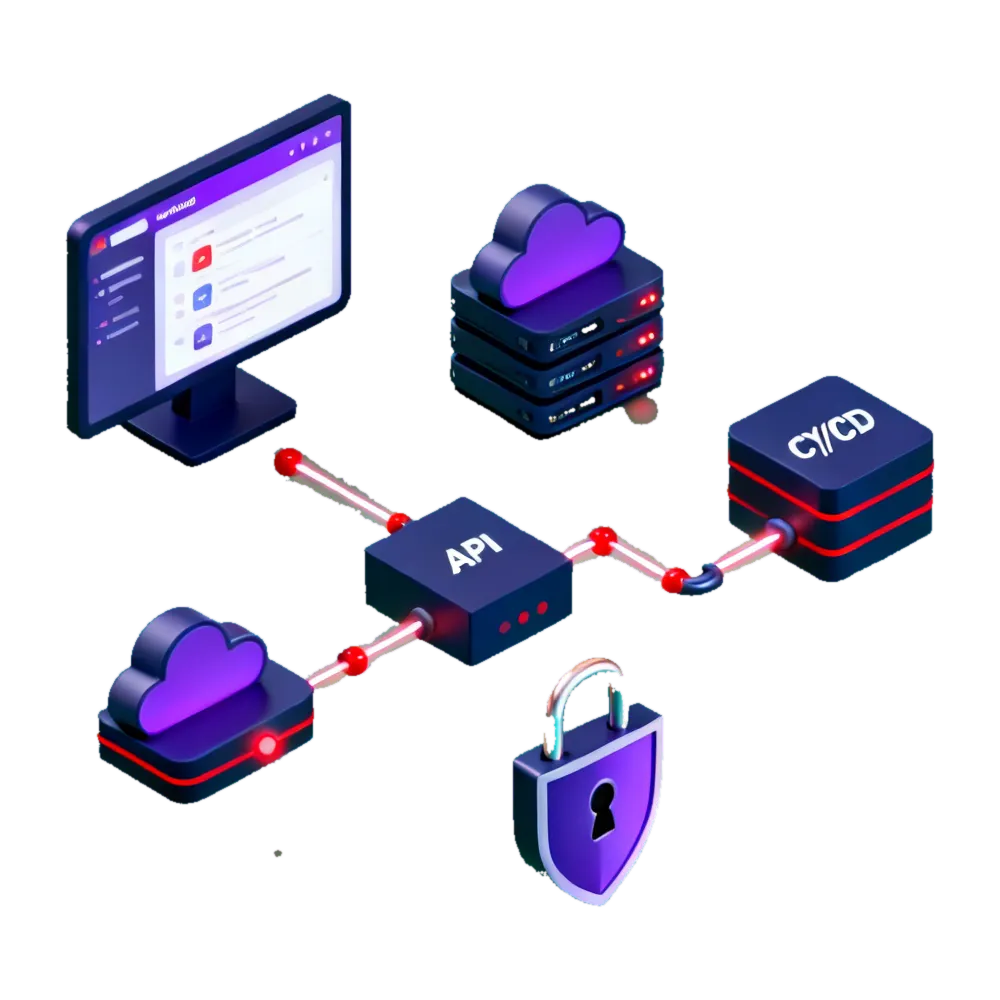
The services a UAE SaaS company usually buys, and the question each one answers. Scoped with you, never sold as a fixed bundle.
Your multi-tenant platform, checked for the authorisation and logic flaws that let one customer's session reach another tenant's data.

The public APIs and webhooks partners build on, checked per role and per object so one caller cannot read or change another's records.

The AWS, Azure or GCP estate behind the platform: identity, network boundaries and the secrets a single foothold would expose.

The AI features and agents you have shipped, from prompt injection to the tools and data a model can be steered into reaching.

An objective-based test against a named crown jewel, to see whether your team actually detects and responds.

The iOS and Android apps and the backend they trust, from stored tokens to sessions replayed off-device.
Three kinds of company sell security testing to SaaS firms in the UAE. Here is where we sit against the regional average, criterion by criterion.
| Criterion | RedTeam Security | UAE market average |
|---|---|---|
 Who runs your engagement | Named, vetted operators against a published bar | Often unnamed or quietly subcontracted |
 How the testing is done | Hands-on, authorisation and logic first | Scanner output lightly reviewed |
 UAE regulator mapping | ISO 27001, SOC 2 and the UAE IAS | One regime, named in passing |
| Detection and response | Measured as a primary deliverable | Defenders usually told in advance |
 Retest after you fix | Priced at scoping, evidence on closure | Sold separately after the report |
 Evidence handling | Retention and destruction stated in writing | Rarely published |
 Access to the tester | A direct line to who found it | Routed through an account manager |
The comparison is a positioning statement, not a league table. Where you need high-volume routine scanning at the lowest price, a regional VAPT firm is the better answer, and we would rather say so now than at the third meeting.
The same operators and the same evidence chain, scoped to the systems and the regulators each industry answers to.
A UAE SaaS company is usually asked to demonstrate security against ISO 27001, SOC 2 and, for public-sector and regulated customers, the UAE Information Assurance Standards (IAS). We are a testing provider, not a certification body: penetration testing supports these programmes and gives the assessor evidence, but the certificate itself is issued by your auditor.
An independent penetration test is the evidence behind the technical controls an ISO 27001 auditor reviews. We scope the test to the assets in your statement of applicability and map each finding to the control it touches.
A SOC 2 examination expects regular testing of the systems that carry customer data. The report, the remediation order and the retest give your auditor the evidence they ask for under the security criteria.
Where you sell to UAE government or regulated entities, the testing is aligned with the controls in the Information Assurance Standards, scoped to the environment that serves those customers.
A multi-tenant pentest covers authorisation at the object and function level, how sessions and tokens are scoped to a tenant, and the boundaries that stop one customer reaching another customer's data. On a SaaS platform that is where the serious findings sit.
The most common high-severity finding we report is a tenant isolation failure: changing an identifier in a request, or reusing a token across accounts, and receiving a record, a file or an action that belongs to another customer. A scanner cannot reason about it, so it is tested by hand, across tenants and across roles.
We scope the application, the public API and the cloud services behind them separately, because a control enforced in the user interface is not the same as one enforced at the API, and an attacker calls the API.
Yes. Production testing is agreed in writing first, denial-of-service techniques are excluded by default, and the rules of engagement fix the testing window, the excluded techniques and a deconfliction contact before any work starts, so nothing arrives as a surprise.
Where a test case would create real records or trigger real billing, it runs against a staging tenant that matches production instead. Where that environment differs materially from production, the report says so, because a test of a different configuration is a test of a different system.
A named contact on both sides handles the case where a tester finds an active compromise rather than a weakness. That path is settled before day one, not during the incident.
A SaaS company should test at least annually for anything internet-facing, before a major release reaches production, and after any material change to authentication, authorisation or the tenant model. A customer's security questionnaire often sets a floor of a test within the last twelve months.
A new tenant-provisioning flow, a new public API or a rewritten login are the changes most likely to introduce the flaws that matter, and because a CI/CD pipeline ships them to every customer at once, each is a reason to test the affected area rather than wait for the annual cycle.
We run the same phases on every engagement so two reports a year apart are comparable, and you can see what changed rather than reading two unrelated documents.
Yes. Every engagement produces the chain a customer's security team asks for: the scope and why it was drawn that way, the authorisation, the findings with severity and owners, the remediation order, and the retest report that turns a finding marked resolved into a finding with evidence behind it.
You also receive a signed attestation of testing for procurement, vendor security questionnaires and auditors. It states the scope, the dates, the standard applied and the outcome, which is what most enterprise buyers and SOC 2 or ISO 27001 assessors actually require.
Findings are mapped to MITRE ATT&CK so your detection team can see which techniques were used and whether anything noticed.
Most SaaS companies start with a web and API pentest of the platform, add an infrastructure pentest across the cloud estate, and test any AI features they have shipped. A mobile app pentest follows where there is a customer app, and an objective-based Red Team once the basics are covered.
The right mix depends on what you are protecting and what your customers have asked for. We scope it with you rather than selling a fixed bundle, and we say where something is not worth buying yet.
Named, vetted operators run your engagement against a published bar. You know who is testing your platform before any work starts, and the work is not quietly handed to a subcontractor.
You get a direct line to the person who found the issue, not everything routed through an account manager. When a finding needs explaining or a fix needs a second look, you talk to the tester who proved it.
Before any testing we sign an NDA and agree written rules of engagement that fix the scope, the authorisation, the testing window and the excluded techniques. Nothing is tested that was not agreed first.
Before the incident, not after it
The companies that come out of an incident well are the ones that tested before it happened. Scope a conversation now, under NDA, and we will show you what we would test and in what order.
 Banking & Financial Services
 Government & Public Sector
 Healthcare
 Oil, Gas & Energy
 Aviation & Logistics
 Retail & E-commerce
 Manufacturing & Industry
 Telecommunications