Key takeaways
- IoT devices generate distinctive network telemetry: SYN packets to Telnet, MQTT, CoAP and UPnP ports from hosts with no business reason to reach them are the first signal a scan produces.
- Firmware channel attacks produce high-fidelity signals, including update requests from unexpected source IPs and DNS queries for non-vendor hostnames, but the monitoring layer is absent on most networks.
- Cloud API gateways are the highest-coverage monitoring point: a device credential authenticating from a non-device IP and abnormal call volume are both readable from structured HTTP logs.
- Wireless and radio scanning rarely reaches the network layer, making dedicated spectrum monitoring or 802.15.4 IDS the only reliable way to observe BLE and Zigbee probing.
- A pre-engagement detection coverage map, produced before the tester arrives, turns finding gaps into a prioritised detection backlog rather than a surprise in the report.
Why IoT detection differs from endpoint monitoring
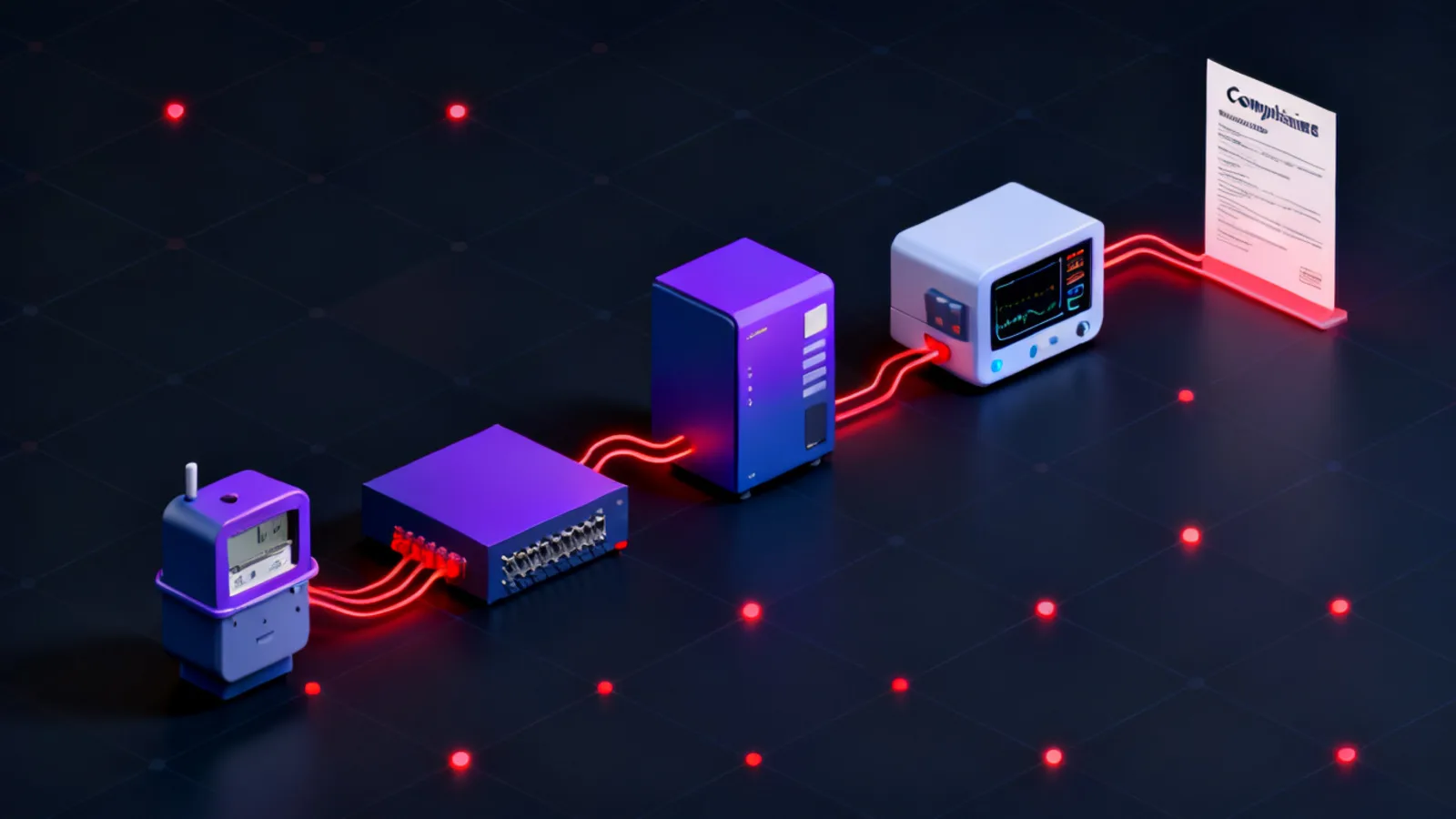
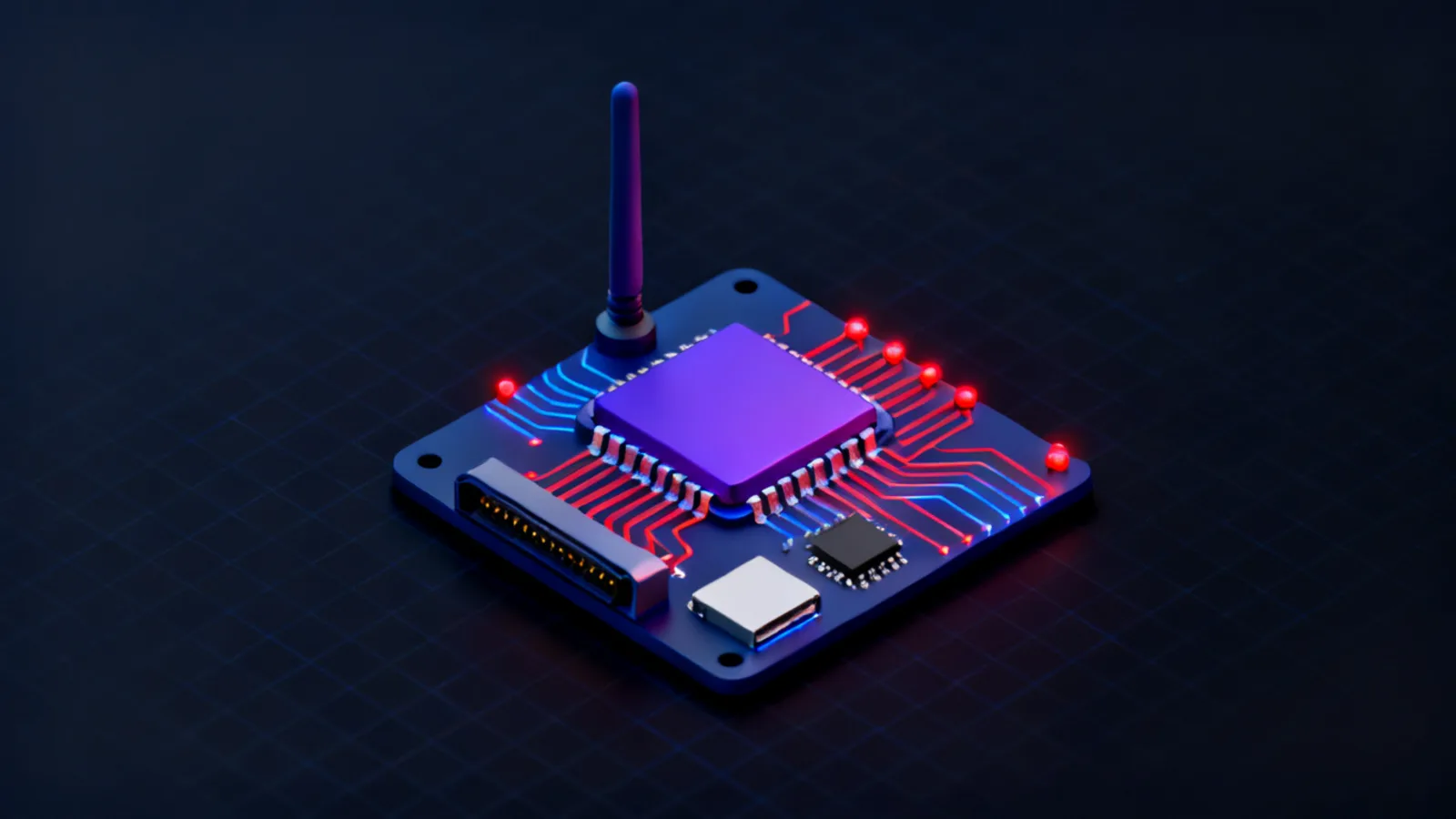
Enterprise SIEM and EDR tools were built for Windows endpoints and Linux servers. They assume an installed agent, a managed operating system and a predictable call pattern to telemetry collection infrastructure. IoT devices run stripped firmware on microcontrollers or real-time operating system variants that accept no agent. Your monitoring coverage sits at the network edge, the cloud API gateway and the firmware update channel, not on the device itself.
The attack surfaces an IoT pentest exercises are distinct from a conventional endpoint test. The device exposes network services, a radio interface, hardware debug ports and the cloud backend it authenticates to. Each surface has a different monitoring layer, and most organisations have coverage on some but not all of them. Knowing which layers are dark before the test starts is the most useful preparation you can make.
Cloud API gateway
Structured HTTP logs, token validation, source IP controls
Network edge
Flow data, packet capture, DHCP and ARP telemetry
Firmware update channel
Update server logs, hash verification, DNS queries
Device and hardware
Tamper seals, USB activity, debug port state
Network signals a tester's tools produce
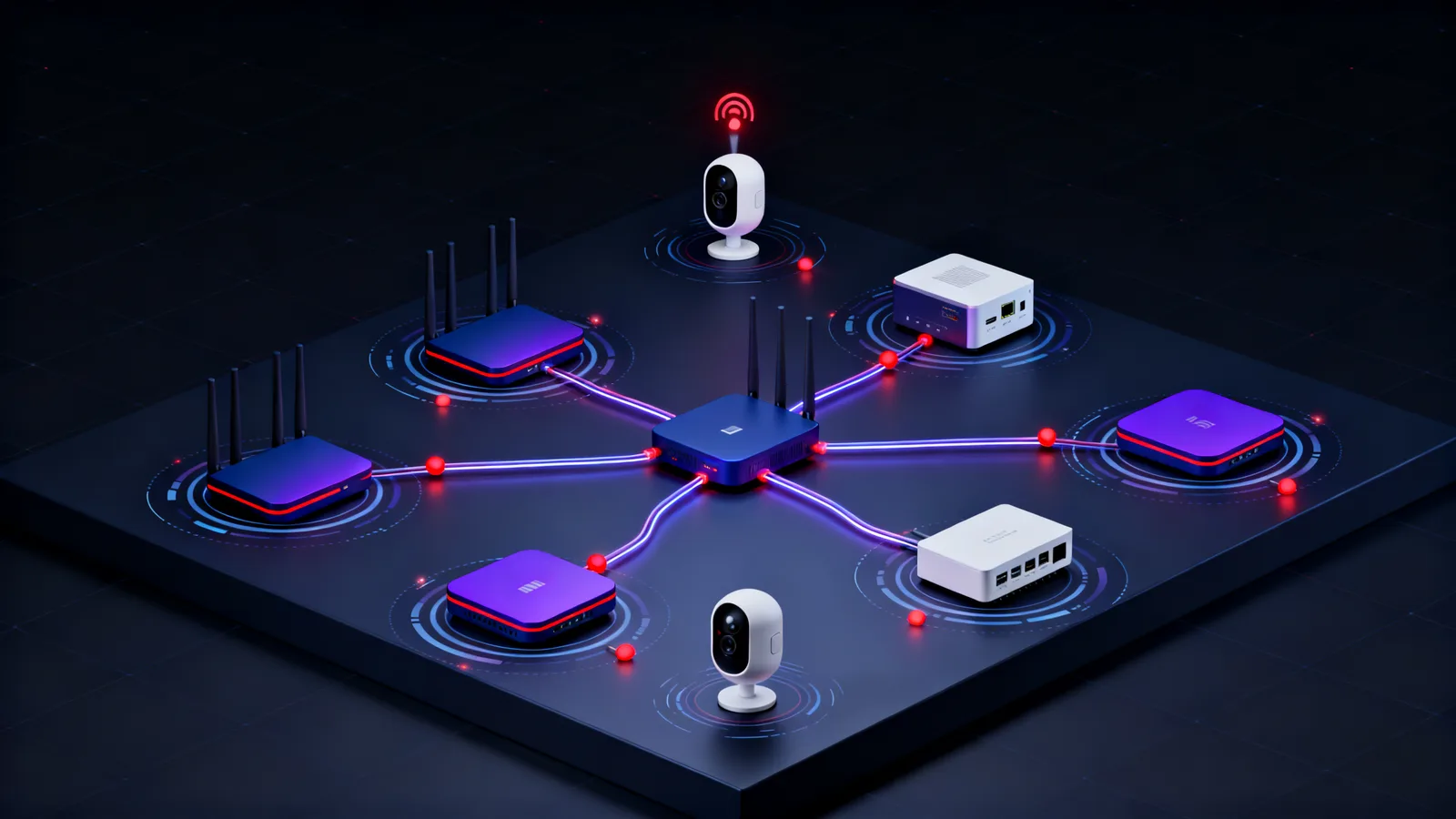
When a tester scans IoT devices, the first signals appear on the network. Port scans and service enumeration against embedded devices generate SYN packets to Telnet (port 23), MQTT (1883 and 8883), CoAP (5683 and 5684), HTTP (80 and 8080) and UPnP SSDP (1900) from a host with no business reason to reach them. A SIEM watching east-west traffic on a dedicated IoT VLAN should alert on any host outside that VLAN initiating connections to device IPs on those ports. The MITRE ATT&CK framework catalogs the network scanning and service discovery techniques testers apply to connected device estates.
ARP scanning and DHCP exhaustion are also common early steps. A tester mapping the network position of a device will send ARP broadcasts that appear as an ARP storm in flow data. DHCP exhaustion, used to understand addressing, appears as a large number of DISCOVER packets from a single source MAC in a short window. Both patterns are detectable from switch-level flow exports even without full packet capture. For infrastructure pentest engagements that include IoT network segments, the same rules apply and your existing signatures likely cover them already.
| Technique | Observable signal | Monitoring source |
|---|---|---|
| Port scan (nmap, masscan) | SYN packets to multiple ports from one source IP | Firewall or flow logs |
| Telnet or MQTT banner grab | TCP connection to port 23 or 1883 with no session data | Packet capture |
| ARP scan | ARP broadcast storm from a non-device host | Switch RSPAN or flow export |
| DHCP exhaustion | Repeated DISCOVER from one MAC in a short window | DHCP server logs |
| UPnP SSDP probe | M-SEARCH packet to 239.255.255.250 port 1900 | Network IDS |
Cloud API signals when the test moves to the backend
IoT devices authenticate to a cloud backend for telemetry, configuration and provisioning. A tester who extracts an API token from firmware or intercepts the device communication channel will call that API from a non-device IP address. Your cloud API gateway logs should show the source IP alongside the device credential, and an alert on a device token authenticating from an address outside the device's registered subnet is one of the cleaner signals an IoT engagement produces.
Token replay and abnormal call volume are the other signals. A tester trying to understand the provisioning flow will make repeated calls to device registration, certificate provisioning and telemetry endpoints. Rate limits at the API gateway fire visibly here. As described in how an IoT pentest is run, testers who find a misconfigured API endpoint probe it systematically, and the call pattern will diverge from what a real device produces in normal operation.
The cloud side is where your existing SIEM can contribute most. The signals arrive as structured HTTP logs rather than raw packets from an unfamiliar radio protocol. Define a baseline of normal call volume and call pattern per device class, then alert on deviation. A device making ten times its normal call volume in a five-minute window is a signal regardless of whether the source is a tester or a genuine attacker.
Firmware channel signals and update server monitoring
Many IoT devices pull firmware updates over HTTPS from a vendor-hosted server. A tester who attempts to intercept or replace a firmware image generates an unusual request: an outbound connection from a tester host to the update endpoint, or a DNS query resolving the update hostname from an unexpected source. Update server logs showing a device credential authenticating from a new source IP, or a firmware hash that does not match the expected version, are both signals worth surfacing. The OWASP IoT Security Project documents firmware security as a primary IoT attack surface and lists the controls an update channel requires.
Testers also test for unsigned or insufficiently verified firmware by staging a replacement image. The signal appears when the device contacts the staged server rather than the legitimate one: DNS for an unfamiliar update hostname, TLS connections to an IP that does not resolve to the vendor domain, or an outbound connection on a port the device does not normally use. A DNS allowlist for known update endpoints makes interception attempts detectable from resolver logs alone, without requiring full packet capture on the device segment.
Wireless and radio protocol signals
Bluetooth Low Energy and Zigbee scanning tools send probe packets that appear on the radio spectrum before they reach any network log. A red team exercise that includes RF work may also reach for Z-Wave or 433 MHz depending on the target devices. Standard SIEM coverage does not reach this layer: dedicated spectrum monitoring or a managed intrusion detection system for 802.15.4 networks is required to observe BLE beacon floods, out-of-band scan packets and unexpected pairing requests.
A BLE scanner sending LE_SCAN_REQ packets produces a distinctive burst visible to any Bluetooth sniffer attached to the same piconet. A Zigbee active scan floods the 802.15.4 channel with beacon requests visible to any capable receiver on the same channel. Neither signal generates a network log entry unless the device responds and the response reaches an access point that logs at the 802.15.4 layer. For organisations that want to confirm whether their RF detection rules fire correctly, purple teaming exercises that include simulated radio scanning are one way to test them without commissioning a full standalone engagement.
Signal fidelity
Firmware channel
Distinct signals, few organisations monitor the update server or DNS allowlist
Cloud API anomalies
Structured HTTP logs, SIEM can reach this layer directly
Radio and RF scanning
Specialist 802.15.4 or spectrum tooling required, rarely deployed
Network port scans
Noisy but well covered by IDS, firewall and flow-based rules
Monitoring coverage
Building a detection coverage map before the engagement starts
The most useful preparation for an IoT pentest is a detection coverage review. Map each phase of the engagement against the monitoring layer that would observe it, and mark the gaps before the tester arrives. The phases follow the attack surface: network enumeration, cloud API access, firmware extraction, wireless scanning and hardware interface probing. A gap at one phase means a tester can operate through it without generating a single alert.
A coverage gap is not a reason to cancel the engagement, and a gap that is hard to close is still worth recording. The point is to have a documented answer to whether you would have detected the activity if it had been a real attacker, before the findings arrive. When the engagement report maps each finding to the monitoring layer that should have caught it, the gap list becomes a prioritised detection backlog rather than a collection of open questions.
Link your coverage map to the scoping call. Agree in advance which monitoring layers are active during the test, which are passive and which are absent. The UAE rules that apply to IoT security testing include requirements from NESA and DESC that bear on monitoring obligations, so knowing your detection gaps before the test is part of satisfying them. The NIST Cybersecurity Framework Detect function provides a cross-sector baseline for what continuous monitoring of networked assets should include, and it is a useful reference point when translating engagement gaps into remediation budget.
IoT monitoring and detection obligations in the UAE
UAE organisations deploying IoT estates face monitoring obligations from multiple regulators. The UAE Information Assurance Standard, published by the National Electronic Security Authority, requires continuous monitoring of networked assets. IoT devices connected to government or critical infrastructure networks fall within that scope, and the expectation covers both network anomalies and access to backend systems. Organisations licensed under DESC in Dubai, including government entities and their technology suppliers, face equivalent requirements under the Dubai Information Security Regulation.
In Abu Dhabi, ADHICS applies to healthcare entities operating connected medical devices. Firmware integrity and cloud API security are directly relevant to patient safety at this scale, and the monitoring requirements under ADHICS cover the device network and the systems it connects to. A pentest finding that reveals a gap in firmware update channel monitoring should be read against those requirements, not treated as a purely technical observation with no regulatory dimension.
Both Abu Dhabi and Dubai have significant concentrations of smart building deployments, connected infrastructure and operational technology that presents a large IoT attack surface. Commissioning an IoT pentest and then reviewing the resulting detection gaps against regulator obligations is the path from test finding to remediation priority. Knowing which of the four monitoring layers are absent before the engagement starts is the starting point for that conversation, and the one that determines whether the report produces a detection backlog or just a list of open questions.
Frequently asked questions
What is detection coverage in an IoT pentest?
Detection coverage refers to which monitoring layers are active and capable of generating an alert for each phase of the engagement. For an IoT pentest it spans four layers: the cloud API gateway, the network edge, the firmware update channel and the device itself. A coverage review maps the engagement phases against those layers before the test starts and identifies the gaps.
How does IoT monitoring differ from standard endpoint monitoring?
Standard endpoint monitoring relies on agents installed on managed operating systems. IoT devices run firmware on microcontrollers or RTOS variants that accept no agent. Monitoring for IoT sits at the network edge, cloud API gateway and firmware update channel rather than on the device, and the radio layer requires specialist tooling that enterprise SIEM products do not cover.
Which network protocols should a SIEM watch during an IoT pentest?
Telnet (port 23), MQTT (1883 and 8883), CoAP (5683 and 5684) and UPnP SSDP (1900) are the ports a tester probes on IoT devices. Alerting on any host outside the IoT VLAN initiating connections to those ports, or on ARP storm and DHCP exhaustion patterns, covers the most common early-phase enumeration techniques.
Can a SIEM detect firmware manipulation attempts?
Yes, at the network and DNS layer. A tester staging a firmware replacement generates DNS queries for unfamiliar update hostnames and outbound TLS connections to non-vendor IPs. Update server logs showing a device credential from a new source IP are also detectable. A DNS allowlist for known update endpoints makes interception attempts visible from resolver logs without requiring packet capture.
How does cloud API monitoring catch IoT pentest activity?
IoT testers frequently extract API tokens from firmware and replay them from a tester host. The cloud API gateway log will show a device credential authenticating from a source IP outside the device subnet. Abnormal call volume, calls to provisioning endpoints from non-device sources and rate limit trips at the gateway are the primary signals to watch.
What signals does wireless scanning produce?
Bluetooth Low Energy scanning produces LE_SCAN_REQ packet bursts visible to any Bluetooth sniffer on the same piconet. Zigbee active scans flood the 802.15.4 channel with beacon requests. Neither signal appears in standard network logs unless a device responds and the response reaches an 802.15.4-capable access point. Dedicated spectrum monitoring or a managed 802.15.4 IDS is required to capture them.
How does an IoT pentest detection review differ from a standard security assessment?
A standard security assessment tests controls on managed hosts where agents and event logs are the primary evidence. An IoT detection review maps monitoring against four distinct layers, two of which, the firmware channel and the radio layer, are absent from most SIEM deployments. The output is a coverage map with explicit gaps rather than a finding list against a known baseline.
What monitoring should fire when a tester probes hardware interfaces?
Hardware interface probing via UART, JTAG and I2C rarely generates network traffic. Physical access controls, tamper-evident seals and USB port activity logs on adjacent infrastructure are the primary detection layer. A device whose enclosure tamper seal is broken, or that connects to an unrecognised USB host, generates the alert rather than a network rule.
How do I baseline normal IoT device behaviour for anomaly detection?
Record call volume per device class to the cloud API gateway over a representative period, typically seven to thirty days. Note the source IP range, the endpoints called and the frequency. An alert threshold set at a multiple of that baseline catches both tester activity and genuine compromise without generating noise during normal operation.
What is the role of a detection gap analysis in an IoT engagement?
A pre-engagement detection gap analysis documents which attack surfaces have active monitoring and which are dark. It sets realistic objectives for the engagement, shapes the rules of engagement and ensures the final report can answer whether each finding would have been detected in a real attack. Without it the report can only describe what the tester found, not what the defender missed.